The Trust Gap: Why Podcast Hosts Outperform Social Influencers By 21 Points
There’s a version of influence that looks impressive on a media plan. Millions of followers. High reach. A recognizable face holding up a product in perfect lighting. And then there’s the kind that actually drives purchase.
Podcast hosts have spent years building something that most advertising environments can’t manufacture: a genuine relationship with their audience. The kind of influence built over hundreds of hours of listening, inside jokes, personal stories, and the accumulated trust that comes from a host who shows up consistently.
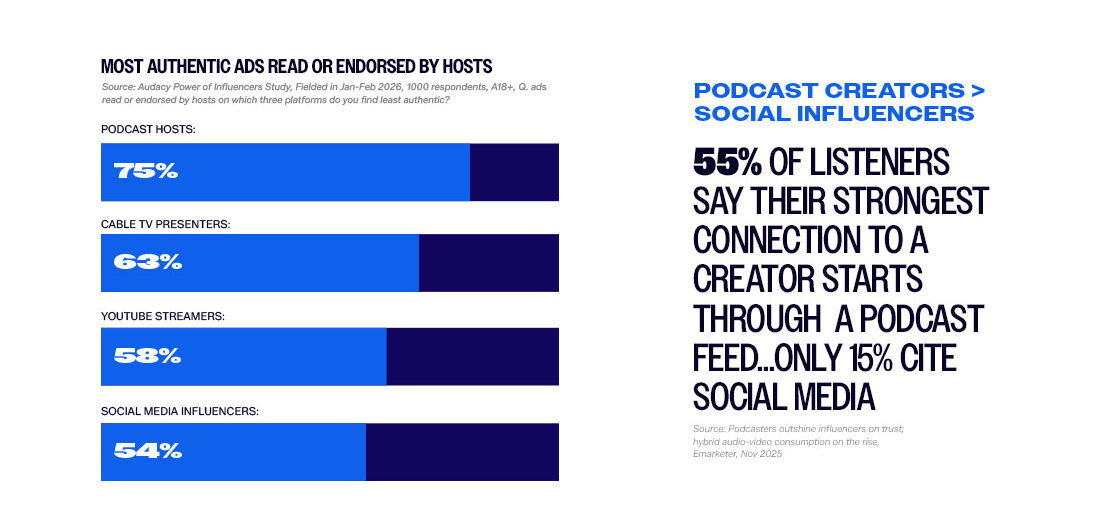
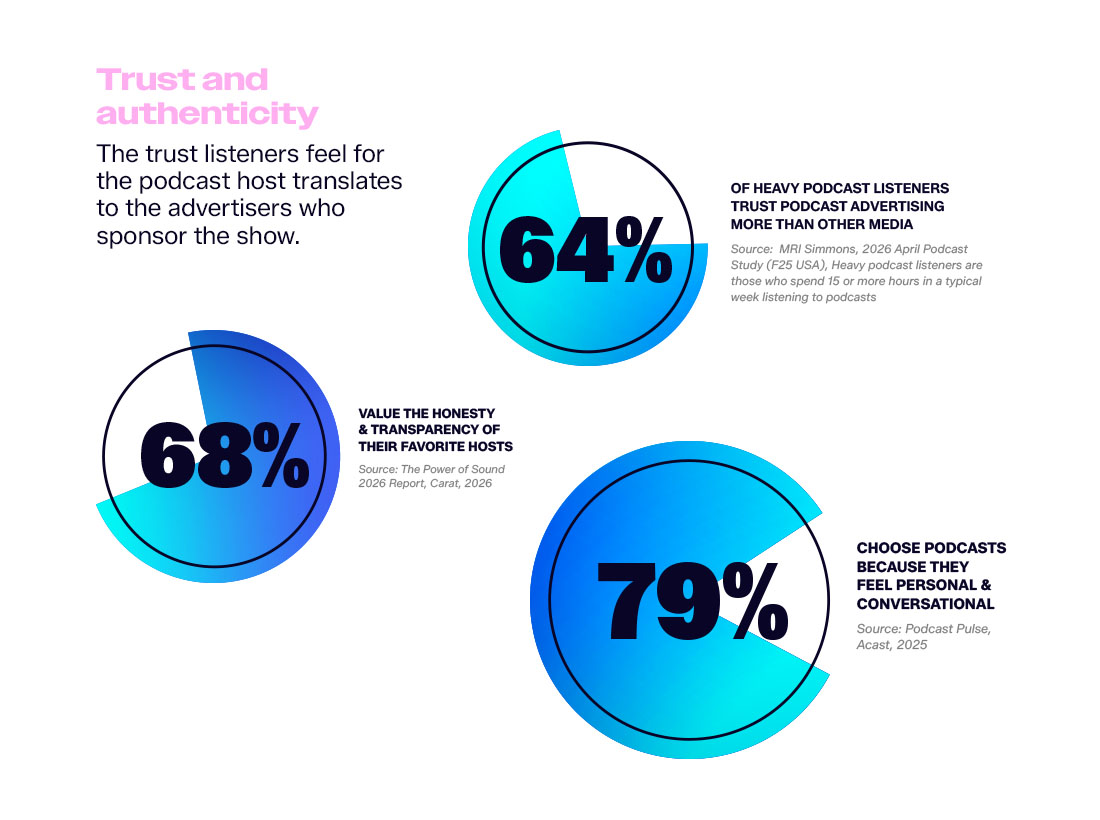
That relationship has a number attached to it now. 75% of listeners rate podcast hosts as the most authentic. Among social media influencers, that figure drops to 54%. That’s not a small gap. That’s a fundamentally different kind of medium.
Why The Gap Exists
The difference isn’t just about format. It’s about time and attention.
When someone follows an influencer on social media, they’re opting into a curated feed alongside hundreds of other accounts. When someone subscribes to a podcast, they’re choosing to spend 30, 60, sometimes 90 minutes in uninterrupted company with one voice. That’s a different level of commitment; and it produces a different level of influence.
“If you can get someone to tune in to your conversation and stick around for 30 minutes to an hour, the amount of baked-in persuasion that you have over that individual just grows with each minute they’re tuned in — unlike almost any other creator channel.” — Adam McNeil, SVP of Client Services at Adopter Media
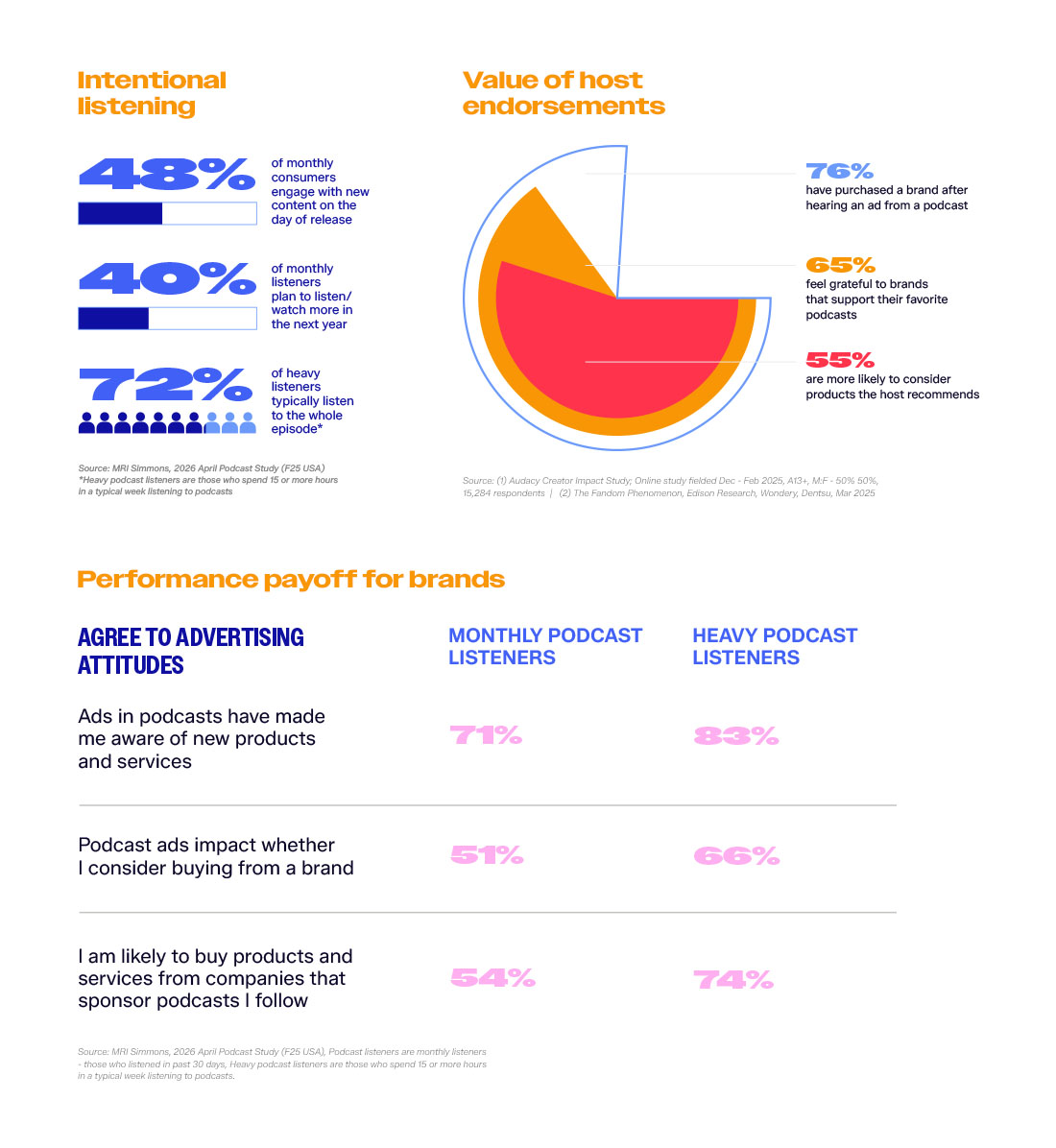
The numbers bear that out. More than 70% of heavy podcast listeners hear each episode all the way through. Nearly half tune in to new episodes on the day they’re released. These aren’t passive consumers grazing through content. They’re actively, intentionally showing up.
What That Attention Means for Advertisers
Attention is the precondition for influence. And podcast listeners have it in unusual supply.
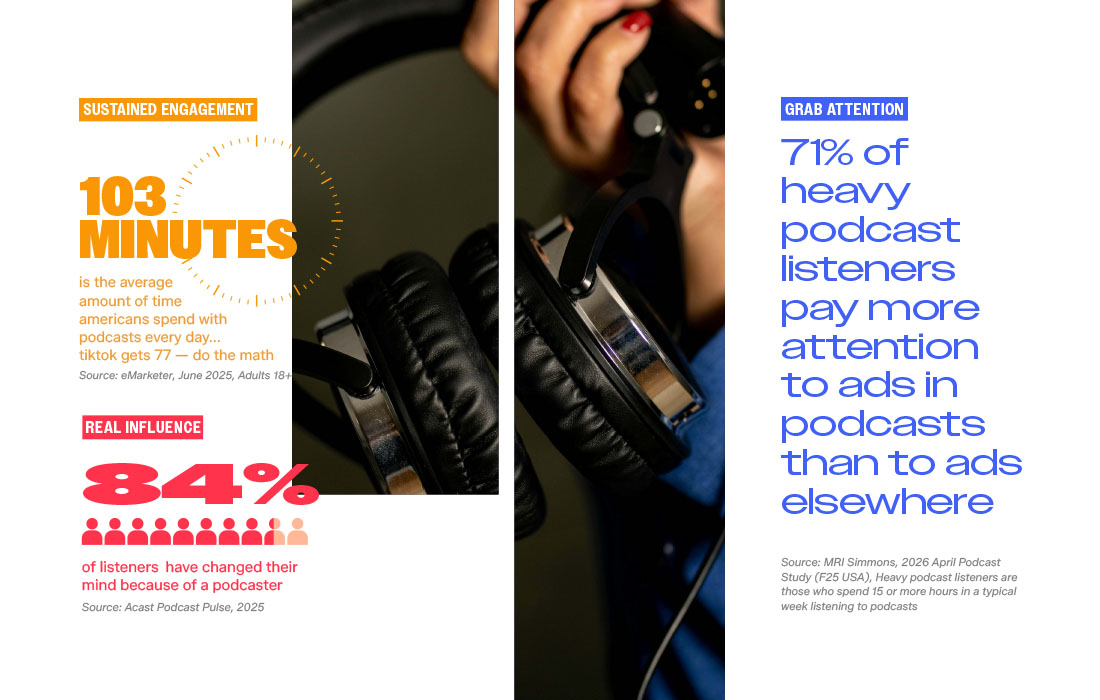
71% say they pay more attention to podcast ads than to ads anywhere else. 84% say a podcaster has changed their mind about something. Those aren’t engagement metrics — those are persuasion metrics. And they flow directly from the trust relationship the host has built.
When a host recommends a product, it doesn’t register as advertising. It registers as a recommendation from someone the listener has chosen to spend time with, someone whose judgment they’ve had hundreds of hours to evaluate. That’s a very different thing from an influencer executing a brand deal.
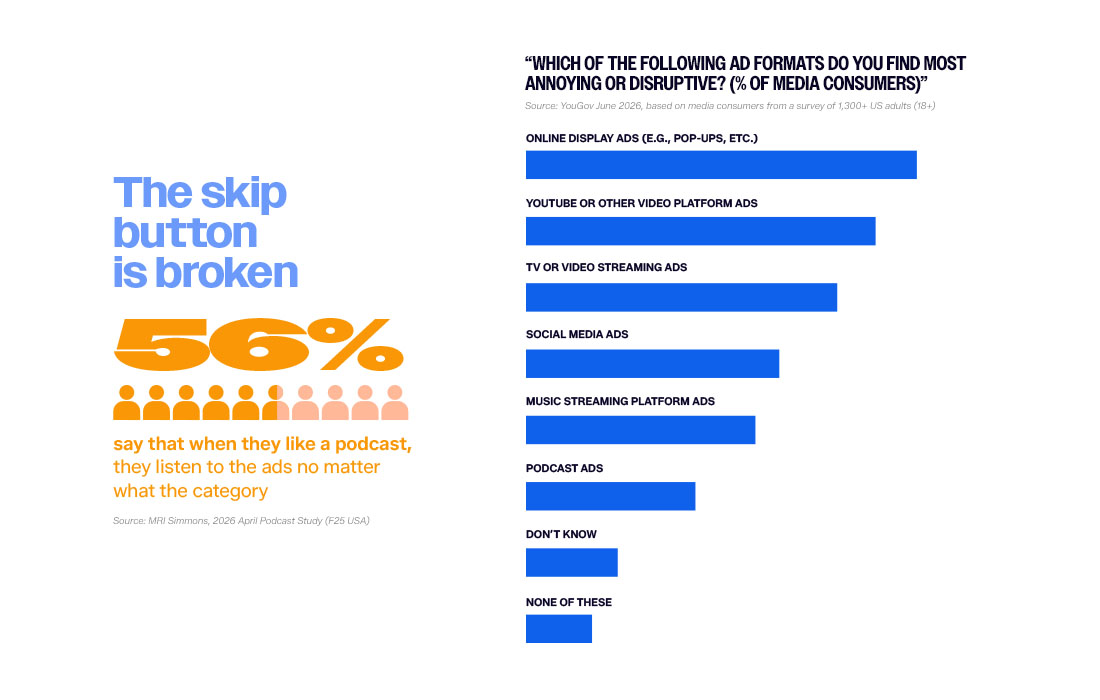
More than half of listeners say they’re more likely to consider products their favorite host recommends. Nearly three-quarters have purchased a brand after hearing a podcast creator endorse it. And more than half say that if an ad appears in a podcast they love, they’ll listen to it — regardless of the category.
The Trust Transfers
Here’s what makes this valuable beyond the listen: the trust a host earns doesn’t stay with the host. It moves to the brand.
64% of heavy podcast listeners say they trust podcast ads more than ads on any other medium. And that trust translates into favorability — listeners feel positively toward the brands that support the shows they love, which is a level of goodwill that’s genuinely hard to buy in other channels.
“Today, in an increasingly artificial world, there’s an increasing premium on authenticity and on real recommendations, which can be deployed at scale through this channel. That’s, without question, its strongest asset.” — Dan Granger, CEO and Founder of Oxford Road
That word — authenticity — is easy to say and hard to build. Podcast hosts have been building it for years, one episode at a time. For brands smart enough to tap into it, that’s not just a media placement. It’s a relationship with an audience that’s already primed to listen.
Want to dig deeper into podcast advertising, check out Audacy’s latest State of Audio guide.
Want to talk more about reaching your target audience?
Let´s TalkRelated Insights
Related Insights
Ready to Make Audio Work for Your Brand?
ADVERTISE WITH US