Your Audience Might Be Paying to Skip Your Ads. Here’s Where To Find Them.
When planning digital audio, it’s easy to focus on a platform’s total audience, how much they listen, and their spending power. But how much of that listening can your ads actually reach? A platform may attract millions of affluent listeners, but if they’re paying for an ad-free experience, they’re doing little for your campaign.
The income numbers show why this matters. Among streaming music services like Spotify, Pandora and Amazon Music, ad-free subscribers have a household income of $111,000, compared with $82,000 for ad-supported listeners. That’s nearly $30,000 less; a 26% difference. If you’re targeting consumers with spending power, that’s a huge gap between the audience you’re picturing and the audience you’re paying to reach.
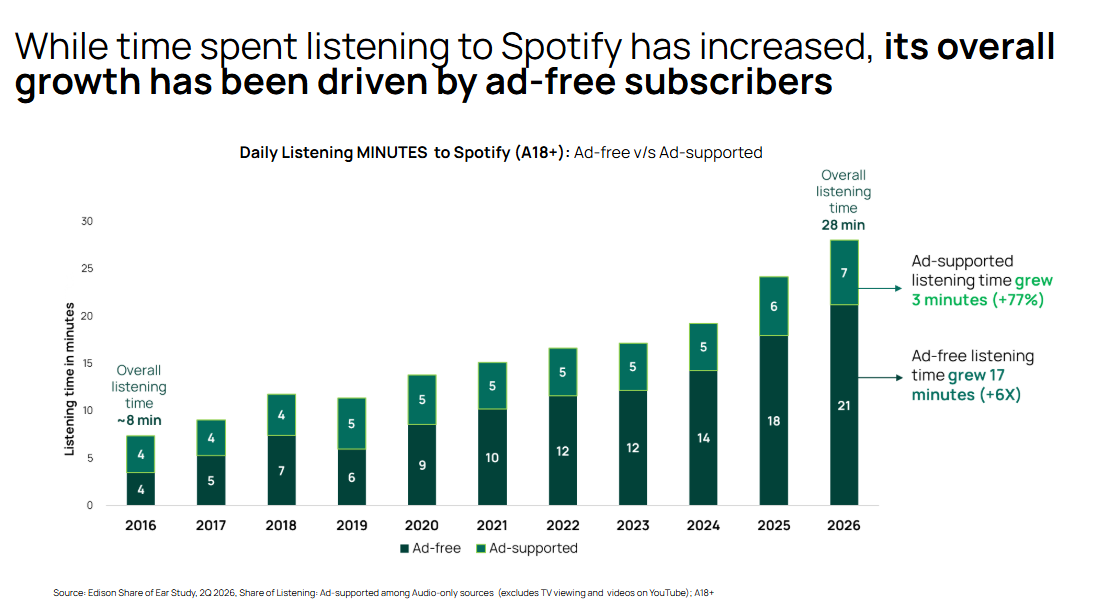
You can see the same thing in Spotify’s growth. Over the past ten years, daily ad-free listening jumped from four minutes to 21, according to Edison Research’s Share of Ear study. Ad-supported listening went from four minutes to seven. Today, roughly 75% of Spotify listening time is ad-free. People are spending more time with Spotify, but most of that listening isn’t available to advertisers.
On the flip side, streaming radio gives advertisers a stronger spending-power story. Its listeners have a median household income of $92,000, about 12% higher than ad-supported streaming music listeners. For brands selling cars, financial services, travel or other purchases where household budgets matter, that’s a compelling reason to include streaming radio in the plan. This is where Audacy’s digital audience comes in handy. Audacy’s content reaches 94 million monthly digital listeners in an ad-supported environment, so the listening is open to advertisers instead of sitting behind a subscription. If your digital audio buy starts and ends with streaming music services, you’re missing an audience with more money to spend on what you’re selling.
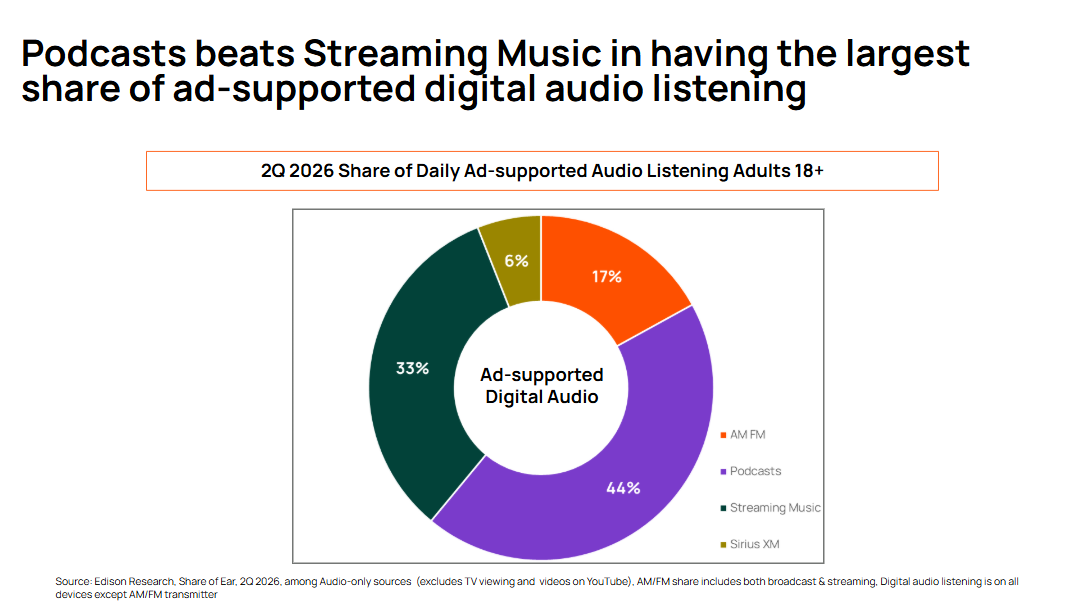
There’s more to digital audio than streaming music services, and the listening numbers make that clear. Streaming radio captures roughly 17% of ad-supported digital audio listening, while podcasts account for 44%. Together, they make up 61% of the listening — nearly double the 33% for streaming music services, according to Edison’s Q2 2026 Share of Ear study. If streaming music services get most of your attention and budget, a big part of your audio opportunity could be overlooked.
Podcasts add another piece to the income story, with listeners at $110,000 in household income. Alongside streaming radio, they give advertisers more options for reaching consumers with greater spending power. This shows why digital audio planning needs to extend beyond the streaming music services that may come to mind first.
Before you put more money into streaming music, take a closer look at who’s actually hearing your ads. The affluent subscribers driving much of the listening growth may be the very people paying to avoid them. Streaming radio brings advertisers an audience with higher household income than ad-supported streaming music listeners, making it a strong choice for brands looking to reach consumers with more spending power.
Want to talk more about reaching your target audience?
Let´s TalkEdison Research, Share of Ear, Q2 2026, adults 18+, audio-only sources (excludes TV viewing and videos on YouTube). AM/FM includes broadcast and streaming; digital audio includes listening on all devices except AM/FM receivers. Spotify listening trends: 2016–2026.
Nielsen Scarborough USA+ (Current 6 Months Only), 2026 Release 1 Current. Base: U.S. adults 18+; paid/free audio streaming service/app use in the past 30 days; listens to internet radio/local station online.
Related Insights
Related Insights
Ready to Make Audio Work for Your Brand?
ADVERTISE WITH US